
Why Can’t You Remember Being a Baby? The Mystery of Infantile Amnesia
The surprising discovery: you might still have those memories
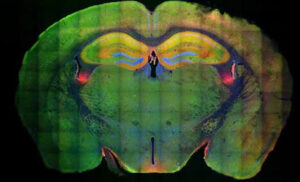
In March 2025, researchers from Yale University and Columbia University published a study in Science that brought a new dimension to the mystery.
The researchers used functional magnetic resonance imaging (fMRI) to examine the hippocampal activity of awake infants. Babies were shown photographs, some of which they had already encountered and others that were completely new. The scientists then measured whether the infants recognised previously viewed images by observing how long they looked at them.
The results were striking. When the hippocampus showed greater activity as an infant first encountered a photograph, that infant was more likely to demonstrate recognition of it later. This relationship became detectable at around one year of age.
The finding provided direct evidence that the human infant hippocampus can encode individual memories. The ability to form memories of specific experiences emerges remarkably early, even though those experiences will eventually disappear from conscious adult recollection.
This changes the central question. If infants can form episodic memories, why can’t adults retrieve them? The researchers suggested that infantile amnesia might be primarily a problem of memory retrieval rather than memory formation. Early memories could be encoded in the brain and subsequently become inaccessible as development changes the neural systems responsible for storing and retrieving them. The distinction is enormous. A memory that was never formed is fundamentally different from a memory that exists but cannot be accessed.
Research involving animals has made this possibility particularly intriguing. Experiments with young mice have demonstrated that memories apparently lost through infantile amnesia can persist in the form of engram cells: groups of neurons associated with a particular experience. In some experiments, researchers have managed to reactivate these neural traces using artificial stimulation, bringing back behavioural responses associated with forgotten experiences.
A 2025 review of research into memory engrams examined how these traces change during development, highlighting evidence that early memories can remain physically represented in the hippocampus even after ordinary retrieval becomes impossible. The human findings from Yale offer an important connection to this animal research: infants already possess the capacity to encode memories that their adult selves may never consciously recover.