
Why Can’t You Remember Being a Baby? The Mystery of Infantile Amnesia
A brain that remembers differently
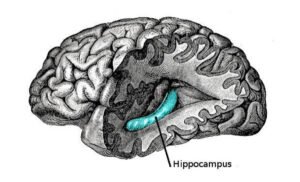
For decades, one of the leading explanations focused on the hippocampus, a structure deep inside the brain that plays a central role in forming and retrieving episodic memories: memories of particular events, including where and when they happened.
In adults, the hippocampus helps transform experiences into memories that can be stored and recalled years later. In infants, however, this system is still developing. Its neural connections are changing rapidly, and the brain is reorganising itself at a remarkable pace. Researchers suspected that the infant hippocampus simply wasn’t mature enough to create the kind of stable, long-lasting autobiographical memories that adults rely on.
Another influential explanation came from the phenomenon of neurogenesis: the production of new neurons. During early development, the hippocampus generates neurons at an exceptionally high rate. According to the neurogenesis hypothesis, this constant growth might disrupt existing memory networks. As new neurons integrate into the hippocampus, they could alter or overwrite the connections supporting previously formed memories.
The idea has received considerable support from experiments with rodents. Researchers have found that increasing neurogenesis can accelerate the loss of early memories, while reducing it can help preserve them. The developing brain, in other words, may be particularly effective at learning precisely because its neural architecture remains so flexible. That same flexibility could make its memories unusually vulnerable to disruption.
Language offers another important piece of the puzzle. Before children acquire language, they experience the world without having the same tools adults use to organise and describe events. Autobiographical memories are closely connected to narrative: we remember experiences as stories involving people, places, sequences and our own participation. As language develops, children become increasingly capable of constructing this kind of personal narrative. Their memories gradually become part of a continuous account of their lives.
These explanations point to different aspects of the same developmental transformation. The infant brain is building the biological machinery, cognitive structures and personal narrative through which human experience becomes an enduring autobiography.