
Frozen in Time: Can Science Actually Bring the Dead Back to Life?
More than 700 people are currently preserved in cryogenic storage facilities around the world, waiting for a future that may never arrive. Their bodies, or in some cases their brains alone, are suspended at temperatures approaching –196°C, with the hope that medicine will eventually become advanced enough to reverse death. Thousands more have already signed up. The idea sounds like science fiction, but the engineering behind it is very real. The problem is that nobody has ever successfully brought a cryopreserved human being back to life.
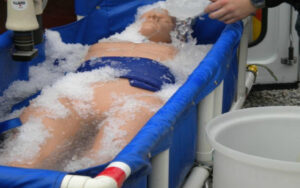
The central challenge is surprisingly difficult to overcome: water. The human body is approximately 60% water, and when ordinary freezing occurs, water molecules form ice crystals. These crystals expand and physically damage cell membranes, disrupt delicate structures and destroy the microscopic organization that allows organs to function. In the brain, where information is encoded through extraordinarily complex networks of neurons, even small-scale structural damage could have devastating consequences.
This is why modern cryonics relies on a technique called vitrification.