
Frozen in Time: Can Science Actually Bring the Dead Back to Life?
Would You Still Be You?
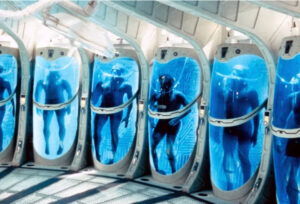
Even if scientists eventually develop a method to preserve every cell in the human brain, another question remains: would the person who wakes up actually be the same person who went to sleep?
The brain contains approximately 86 billion neurons, connected through trillions of synapses. These connections form constantly changing networks associated with memory, personality, learned behavior and individual experience. A significant part of what makes someone who they are depends on the physical organization and functional properties of these networks.
This is why preserving the brain’s overall shape is insufficient. Its microscopic architecture matters. The connections between neurons, the strength of individual synapses and the molecular mechanisms involved in storing information would all need to survive the preservation process.
The PNAS experiment offers an encouraging starting point because researchers recovered measurable synaptic transmission and other electrophysiological properties after vitrification. However, demonstrating that neurons can communicate again is fundamentally different from demonstrating that a brain retains its memories. Researchers have not established that a cryopreserved brain can recover its original information, reconstruct its previous patterns of activity or restore consciousness. The distinction is enormous: biological activity is one thing; continuity of personal identity is another.