
Frozen in Time: Can Science Actually Bring the Dead Back to Life?
The Future Is Still on Ice
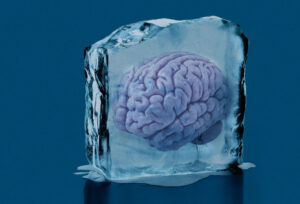
For now, cryonics operates on an extraordinary assumption: that future technology will solve problems that current science cannot. Organizations such as Alcor, the Cryonics Institute and KrioRus maintain facilities where preserved bodies and brains are stored in liquid nitrogen. The process typically begins immediately after legal death is declared, with the goal of minimizing deterioration before long-term preservation.
The number of people choosing the procedure continues to grow, with thousands more waiting for their arrangements to take effect. Yet the industry has no demonstrated method for reversing human cryopreservation. No preserved patient has ever been successfully rewarmed and restored to life.
The 2026 PNAS research represents genuine progress. For the first time, scientists have demonstrated that complex neural tissue can regain measurable biological function after vitrification. It gives researchers new information about the limits of cryoprotectant toxicity and the possibility of preserving delicate brain structures.
But the distance between a functioning mouse hippocampus and a living human being remains immense. Scientists still need to solve the problems of whole-organ preservation, uniform chemical distribution, thermal stress, tissue recovery and the restoration of the brain’s original information. Cryonics is therefore a bet on the future of biotechnology, neuroscience and medicine. Its customers are paying for the possibility that someone, someday, will figure out how to reverse a process that nobody has yet managed to reverse.
For hundreds of people already suspended in liquid nitrogen, that possibility is all they have.