
Why Is Water So Weird? The 70+ Anomalies That Make Life Possible
A molecule with an unusual personality
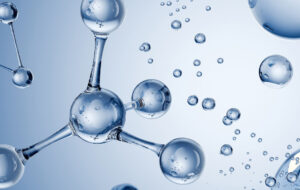
The explanation begins with water’s molecular structure. Each molecule consists of two hydrogen atoms bonded to one oxygen atom, forming a bent shape. Oxygen attracts electrons more strongly than hydrogen does, giving the molecule a slightly negative charge near the oxygen and slightly positive charges near the hydrogen atoms.
This uneven distribution of electrical charge allows neighbouring water molecules to attract one another through hydrogen bonds. These bonds are relatively weak compared with the chemical bonds holding atoms together, but they constantly form, break, and reform throughout liquid water.
At any given moment, a water molecule can participate in several hydrogen bonds with its neighbours. The resulting network gives water properties that are dramatically different from those of similarly small molecules.
Consider boiling. Hydrogen sulfide, a molecule structurally similar to water, boils at approximately −60°C. Water boils at 100°C under normal atmospheric pressure. The difference comes largely from the energy required to separate water molecules from one another. Without hydrogen bonding, water would behave more like a gas at ordinary temperatures, and Earth’s oceans would never exist in their present form.