
Why Did Humans Start Farming? It Made Everything Worse
Nobody Planned the Agricultural Revolution
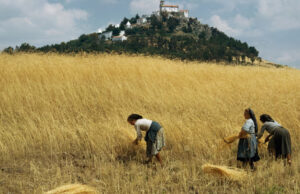
Another important part of the explanation is that the transition was probably much less dramatic than its name suggests. There was no single morning when a group of hunter-gatherers decided to abandon their old lifestyle and become farmers. Agriculture emerged gradually, independently in several parts of the world, including Southwest Asia, China, New Guinea, Mesoamerica, and the Andes.
Early cultivation was often combined with hunting, fishing, and gathering. Communities experimented with planting useful wild plants, protecting them, and eventually selecting varieties with desirable characteristics. People could continue gathering food while maintaining small cultivated plots.
Over generations, however, these experiments changed human relationships with the environment. Plants that produced larger seeds or were easier to harvest became increasingly valuable. Humans began selecting and replanting them, gradually transforming wild species into domesticated crops.
The same process happened with animals. Sheep, goats, pigs, and cattle became sources of meat, milk, hides, and labor. Food production increasingly depended on human management rather than the unpredictable availability of wild resources. What began as an additional food source gradually became the foundation of entire communities.