
Where Did Language Come From? The Answer Keeps Getting Older
The Inheritance of Language
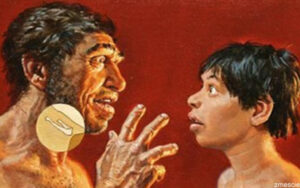
This changes how we might understand the relationship between language and human evolution. For decades, language was frequently presented as one of the defining innovations that separated Homo sapiens from other human species. The ability to construct complex sentences, communicate abstract concepts and transmit knowledge across generations appeared central to our evolutionary success.
But if important components of the biological capacity for language predate Homo sapiens by hundreds of thousands of years, then our species inherited a much older evolutionary development. Our ancestors were working with biological foundations that had already been shaped across generations of hominin evolution.
Neanderthals become particularly interesting in this context. They shared a substantial portion of our evolutionary history, possessed sophisticated tools, controlled fire, cared for injured members of their communities and produced objects with symbolic significance. The genetic findings add another dimension to this picture: the biological foundations associated with language were part of an evolutionary inheritance shared across ancient human populations.
The cultural and linguistic worlds of Neanderthals remain difficult to reconstruct, but the old image of them as fundamentally incapable of complex communication becomes increasingly difficult to maintain. There is also a much larger question hiding in these findings. If the biological foundations of language are hundreds of thousands of years old, how long did it take for them to become the elaborate systems we use today? How many generations of hominins communicated through increasingly sophisticated vocal signals before anything resembling modern language emerged?
Language may have developed gradually, accumulating complexity over immense stretches of evolutionary time, long before the archaeological record began revealing its cultural consequences.
The mystery of language has therefore acquired a much deeper history. The familiar story placed its beginnings near the emergence of recognisably modern human culture. The genetic evidence now points towards an inheritance that reaches into a world populated by other human species, long before our own appeared. We may have spent decades asking when humans first began speaking. The more surprising possibility is that language had already been evolving for hundreds of thousands of years before there were humans quite like us to speak it.