
Can AI Read Your Mind? How Close Are We Really?
Giving a Voice—and a Body—Back to Paralysed Patients
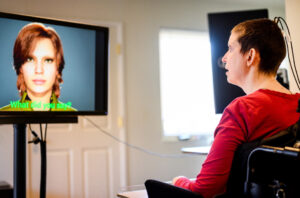
On September 14, researchers at UCSF reported a brain-computer interface that can decode speech and physical gestures at the same time. The system uses a high-density electrocorticography implant containing 253 electrodes placed directly on the surface of the brain.
The researchers tested the technology in people with severe paralysis, including individuals affected by brainstem stroke and ALS. The participants attempted to speak or perform gestures such as waving or giving a thumbs-up, even when their bodies could no longer physically carry out those movements. AI translated the resulting brain signals into commands for a personalised full-body virtual avatar. Speech appeared as text, while gestures could make the avatar move. The system could even decode the two forms of communication simultaneously, allowing a participant to conduct a conversation using words and body language together.
That distinction matters because human communication has never been purely verbal. A nod, shrug, wave or facial expression can completely change the meaning of a sentence. For someone who has lost the ability to move or speak, restoring those signals could make communication dramatically more natural. In one conversational test, a participant achieved median decoding accuracies of 100% for both speech and gestures across three blocks. The researchers describe the work as a proof of concept for a unified communication system rather than a finished clinical device.