
What Is Ball Lightning? A Physics Mystery Documented for 2,000 Years
Other Theories: Plasma, Gas and Electrical Knots
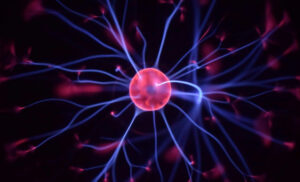
The silicon hypothesis is one of several competing explanations. Another major family of theories involves plasma: electrically charged gas containing free electrons and ions.
Ordinary lightning produces plasma, but it normally cools and disappears extremely quickly. A stable, glowing plasma sphere lasting several seconds would require an unusual mechanism to maintain its energy and structure. Researchers have proposed configurations involving electromagnetic fields that could potentially confine plasma into a compact, luminous shape.
Other models focus on burning gases and chemical reactions in the atmosphere. Under certain conditions, gases or combustible materials could form a pocket of glowing, self-sustaining reactions. These models attempt to explain why some reported spheres produce heat, smoke, odors, or explosive endings.
Laboratory experiments have also produced unusual luminous plasma structures, giving researchers physical systems they can study and compare with eyewitness descriptions. However, reproducing individual characteristics does not yet provide a complete explanation of the natural phenomenon.