
AI Just Solved One of Math’s Millennium Problems – What Does It Mean for Us?
In September 2026, OpenAI announced that an unreleased AI model had solved the Navier–Stokes existence and smoothness problem, one of seven Millennium Prize Problems carrying a $1 million reward. The problem had resisted mathematicians for nearly 90 years. According to the announcement, approximately 10,000 AI agents worked together for 88 hours, exchanging nearly five million messages and generating 130 billion output tokens before producing a proof. It sounds like the biggest scientific breakthrough of the decade. An artificial intelligence has accomplished something generations of mathematicians could not. So why hasn’t your weather forecast improved?
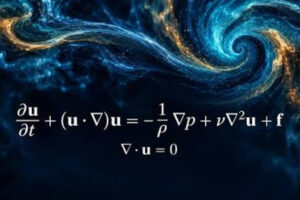
The short answer: it hasn’t. Yet.
And that is probably the most interesting part of the story. Despite the enormous mathematical achievement, the proof has almost no immediate effect on everyday life. Weather forecasts are not suddenly becoming more accurate. The encryption protecting your online banking remains in place. Airplanes still fly, medical devices still operate, and engineers are still using the same equations to model fluid movement.
To understand why, we need to look at what the AI actually solved.