
The Tower of Babel: Did Humans Really Try to Build a Tower to Heaven?
Did the Israelites Actually See It?
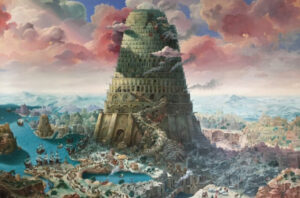
The biblical Tower of Babel story, in its present form, is widely associated with the period of the Babylonian Exile. Biblical scholarship has identified Genesis 11:1–9 among the passages that contain probable exilic material. That matters because the Neo-Babylonian city confronting the Judean exiles was dominated by monumental architecture.
Etemenanki was rebuilt and enlarged over centuries, with the Neo-Babylonian kings Nabopolassar and Nebuchadnezzar II carrying the reconstruction toward its monumental final form. Nebuchadnezzar’s inscriptions describe the project in language that explicitly connects the raising of Etemenanki with heaven.
The biblical writers therefore had an extraordinary real-world object available to them: a colossal tower standing in the center of the empire that had conquered Jerusalem.
A 2026 discussion in Biblical Archaeology Review has revisited the assumption that Genesis portrays the Tower of Babel as an unfinished construction project. Scholars Matthieu Richelle and David S. Vanderhooft argue that the Hebrew grammar can support the interpretation that the humans had already built the tower when God intervened.
If that reading is correct, the story becomes even sharper. The tower did not have to remain forever unfinished. Humanity built its monument. Babylon reached toward heaven. And the biblical story remembered that achievement as the moment when human unity itself became dangerous.