
The Tower of Babel: Did Humans Really Try to Build a Tower to Heaven?
A Tower Buried Beneath Babylon
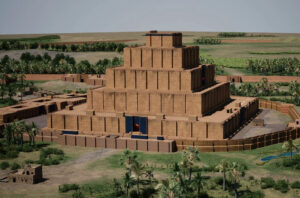
When German archaeologist Robert Koldewey began excavating Babylon in the late 19th century, he was looking for the remains of one of the ancient world’s greatest cities. In 1913, his team reached the remains of Etemenanki, the enormous ziggurat dedicated to Marduk, Babylon’s patron god. The surviving foundations measured roughly 91 meters on each side.
What they found was only the bottom of the monument. Most of the tower had disappeared, probably because its baked bricks were repeatedly quarried and reused. Yet the surviving foundation was enormous enough to reveal the scale of the original project.
Ancient texts provide the missing pieces. The so-called Esagil Tablet describes a seven-level ziggurat with a square base approximately 90 meters wide and a total height of approximately 90 meters. A later Babylonian stele, now known as the Tower of Babylon Stele, also depicts Etemenanki and provides evidence for its monumental design.
If the traditional reconstruction is correct, the tower would have risen almost 300 feet into the Babylonian sky. But there is an intriguing complication: archaeologists cannot simply measure its original height today. The upper levels are gone, leaving scholars to reconstruct them from texts and images.
And one researcher thinks the tower was considerably shorter.