
Apple’s First Touchscreen MacBook Is Here. But Do You Actually Need It?
Is the Touchscreen Worth $400 More?
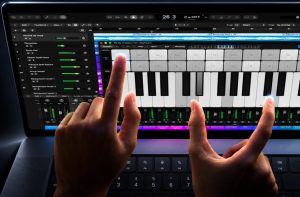
The new MacBook Pro starts at $2,899 for the 14-inch model and $3,399 for the 16-inch version. That’s a $400 premium over comparable MacBook Pro configurations with the conventional Liquid Retina XDR display. Both versions use the same M5 Pro and M5 Max chip families, and Apple’s advertised battery-life figures remain unchanged.
That price difference makes the decision fairly straightforward. If you mainly write, browse, code or work with spreadsheets, you may not find much reason to reach for the screen. The trackpad is already excellent, and touch doesn’t automatically make desktop software easier to use.
But if you spend your days editing photographs, working with video, designing graphics or simply appreciate having a better display, the upgrade becomes more compelling. The OLED panel, increased brightness, wider colour gamut and lighter chassis are benefits you’ll notice even if you rarely touch the screen.
There are still things that require proper long-term testing: how distracting fingerprints become, whether the hinge remains steady during frequent interaction, and whether touch has any meaningful effect on battery life. Apple’s specifications don’t answer all of those questions.
For now, the touchscreen MacBook Pro looks like an unusual first step rather than a completely new way of using a laptop. Touch is an interesting addition, but the display is the real attraction. And at nearly $3,000, that’s probably the feature Apple needs to get right.