
It’s Getting Hot In The Artic – Where Is The Winter Going?
Winter Has Its Own Warming Mechanism
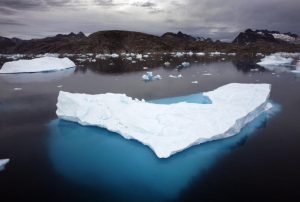
To understand why Arctic winters are changing so rapidly, it helps to look at what happens to energy when it enters the polar environment.
During summer, sunlight absorbed by the Arctic is largely consumed by melting ice and warming the upper ocean. A 2026 process-based study found that approximately 86% of the additional energy in summer goes into these processes rather than directly heating the atmosphere. The ice and ocean effectively absorb much of the incoming energy, delaying its impact on air temperatures.
Winter operates under different conditions. Sunlight becomes scarce or disappears entirely during the polar night, leaving the atmosphere and ocean to exchange the heat accumulated over the warmer months. As sea ice retreats and thins, more heat escapes from the relatively warm ocean into the atmosphere.
Water vapor intensifies this process. A warmer atmosphere can hold more moisture, and water vapor absorbs and emits infrared radiation, including radiation directed back toward Earth’s surface. This downward longwave radiation helps keep the surface warm. The resulting temperature differences strengthen turbulent exchanges of heat between the surface and the lower atmosphere, adding further warmth to the air.
The cycle reinforces itself: moisture increases atmospheric heat retention, surface temperatures rise, turbulent heat fluxes intensify, and the lower atmosphere warms. This moisture–radiation–turbulence feedback is particularly effective during the Arctic winter, when the region’s energy balance depends heavily on heat exchanged between the ocean, ice, and atmosphere.
The result is a striking seasonal asymmetry. Summer warming can be absorbed by melting ice before it produces an equivalent rise in air temperature. Winter warming has a much more direct route into the atmosphere, making cold-season temperatures especially sensitive to changes in moisture, sea ice, and ocean heat.