
The Ocean’s Biggest Current Is Slowing. Europe Is Going to Feel It
What Happens If the AMOC Weakens Further?
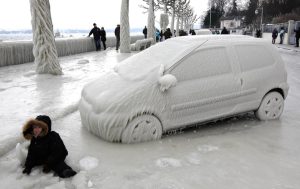
Europe would face some of the most consequential effects of a major AMOC slowdown.
Northern and western Europe could experience substantial cooling, particularly during winter, as less heat reaches the North Atlantic. Regional temperature changes would interact with shifting atmospheric circulation, potentially altering storm tracks, rainfall, and the distribution of extreme weather.
Agriculture would be especially vulnerable. European food production depends on seasonal patterns that farmers have adapted to over generations. Changes in growing seasons, precipitation, and the frequency of droughts or floods could undermine crop yields and complicate food production across the continent.
The consequences would extend beyond Europe. A weakened AMOC would redistribute heat across the Atlantic, changing regional sea levels and weather patterns. Along the U.S. East Coast, changes in ocean circulation could contribute to additional sea-level rise, intensifying the risks facing coastal communities already threatened by rising seas.
These changes would unfold alongside other climate pressures, including heatwaves, melting ice, and shifting rainfall patterns. Governments, infrastructure systems, and food supply chains would have to contend with a climate increasingly different from the one for which they were designed.